Nataly Kambur

The October contract reflects expectations for the start of the U.S. autumn shoulder season, when demand for natural gas used in power generation typically declines as temperatures moderate and air-conditioning use falls. At the same time, winter heating demand has yet to become a major driver.
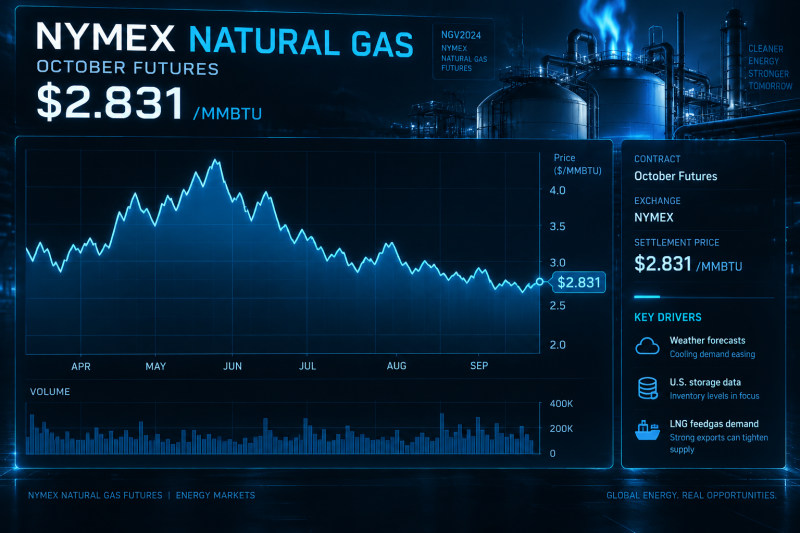
The market is now particularly sensitive to weather forecasts and weekly U.S. storage data. Warmer-than-expected conditions can support gas-fired power demand, while cooler forecasts can increase pressure on prices before the heating season begins.
LNG feedgas demand is another key variable. Strong flows to U.S. LNG export terminals remove more gas from the domestic market and can tighten the supply-demand balance, while weaker LNG demand has the opposite effect.
With October futures at $2.831/MMBtu, traders are watching whether the contract can recover above $3/MMBtu or remains under pressure during the transition from summer cooling demand to winter heating demand.
 Nataly Kambur