Alex Bobrov

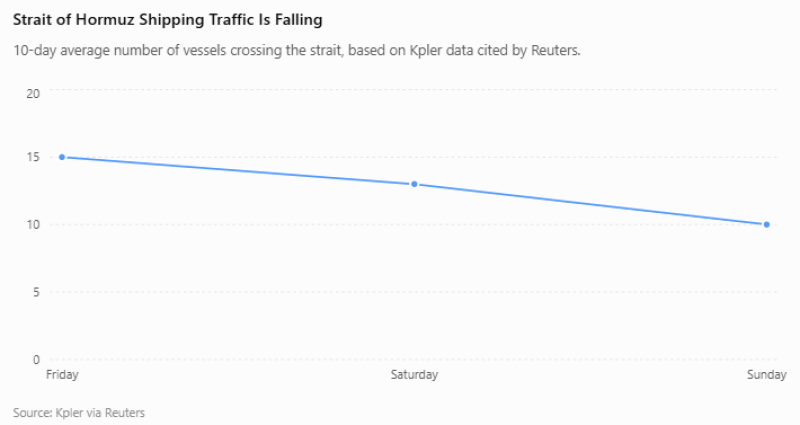
Only 2 vessels crossed on Saturday and 6 on Sunday, with most using the Iranian route. The 10-day average fell from more than 15 vessels per day on Friday to 10 on Sunday, a decline of roughly 33% and the lowest level since May.
Kpler recorded no VLCCs exiting Hormuz since Wednesday. A VLCC typically carries around 2 million barrels of crude oil.
On Sunday, 1 VLCC and 3 bulk carriers entered the strait. A tanker carrying refined products from Saudi Arabia attempted to exit but was turned back, according to LSEG data.
Security Risk
UK Maritime Trade Operations has recorded 27 projectile-strike incidents since July 6 involving vessels in and around Hormuz.
The latest escalation involved attacks on 3 Iranian oil tankers, 3 tankers targeted by Iran and 3 additional U.S. vessels.
Oil Impact
Before the conflict, roughly 20% of global oil and gas shipments passed through the Strait of Hormuz. Asian seaborne crude imports have fallen about 16% since February, while China's imports averaged 7.14 million bpd in August, down roughly 37% from pre-conflict levels.
Brent crude has risen about 35% since late February to $97.6 per barrel, including an 8% gain last week.
Goldman Sachs estimates oil could reach $120 per barrel if attacks on Middle Eastern shipping intensify, compared with around $80 if exports normalize.
 Alex Bobrov